News & insightsBlog
Digital twins bring people and ideas to life through the Holobox. From healthcare to advertising and from hospitality to education, they make information clear, personal, and engaging.
By Andre Smith, Founder & CEO, HoloconnectsPublished 22 September 2025
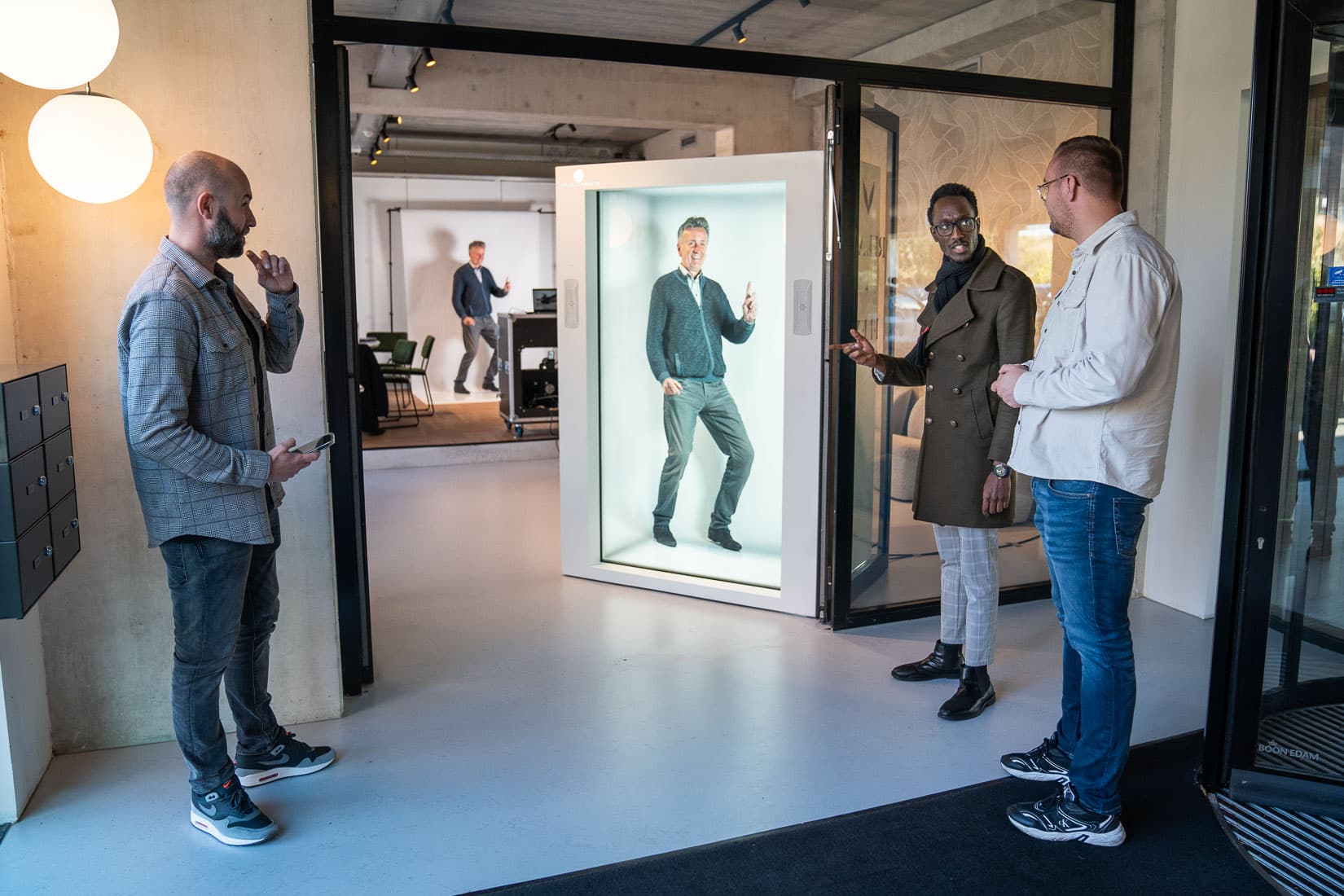
A Digital Twin is a generative-AI reconstruction of a person, character, or scene that can be rendered live inside a Holobox. With sparse source material, photos, a single interview, archival footage, we can synthesise voice, appearance, and gesture into a presence that feels real.
The use cases span industries: healthcare onboarding (a familiar face explains a procedure in the patient's language), advertising (a brand ambassador appears in dozens of cities at once), hospitality (a check-in host that never sleeps), education (a historical figure that students can talk back to).
For the opening of ING's new Brussels office, Holoconnects recreated Baron Léon Lambert as a Digital Twin, a lifelike hologram bridging the bank's heritage with the present.
Other deployments include corporate keynotes, museum exhibits, and live event hosting where the speaker can't physically be there.
The pipeline is generative-AI all the way through, which means a Digital Twin can be created from less source material than a traditional video production would need. That keeps the cost-per-deployment low and the lead time short, usually a few weeks from brief to live hologram, not months.

