News & insightsPress
El Confidencial profiles holographic care from Crescent Regional Hospital to a future where AI driven holograms support astronauts on long-duration space missions.
Published 13 June 2025

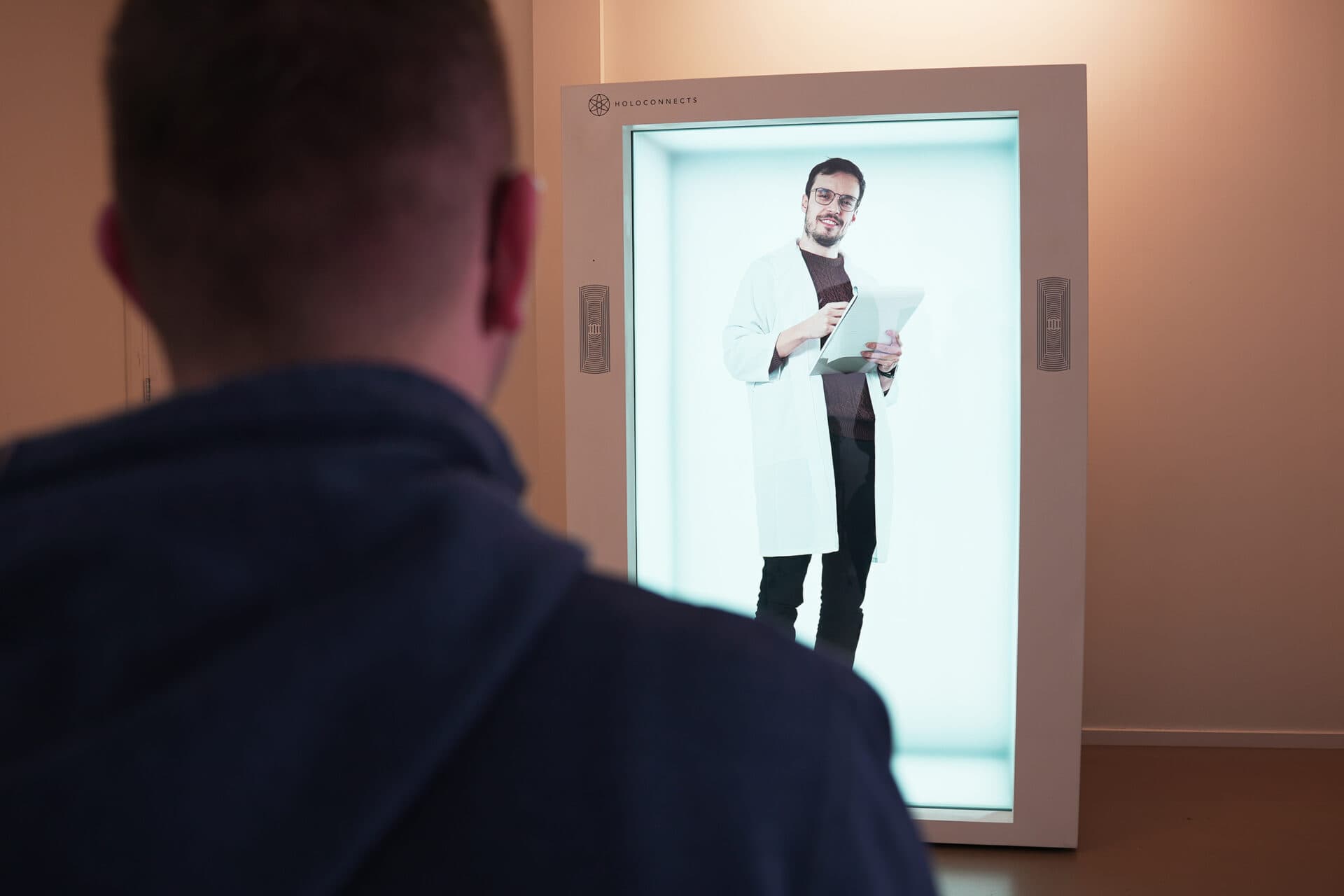
Holograms are already a reality in medical centres. Texas's Crescent Regional Hospital uses holographic technology to connect patients in remote areas with specialist doctors. Holoconnects pioneered the deployment in 2022 (initially at airports and events) and has since extended to hospitals in India, Germany, the US, Italy, Qatar, and South Korea.
Per Holoconnects founder and CEO Andre Smith, the hologram is not a replacement for physical examination: "It's for patient intake and triage, health education and orientation, follow-up consultations, medication adherence and behavioural support, mental-health assessments, multilingual explanations, and emotional support."
Both patient and doctor can appear as holograms in separate rooms, enabling realistic consultations without travel. The same setup also serves clinician-to-clinician collaboration: internal meetings between specialists without physical presence.
One particularly forward-looking application: long-duration space missions. AI powered holographic avatars can support astronauts with mental-health check-ins, medical instructions, and real time problem-solving, providing a sense of human connection and guidance even when real time communication with Earth is delayed by minutes.
Holoconnects is exploring this with partners specialising in extreme environments. Closer to home, AI holographic companions are already guiding patients from hospital entry to the consultation phase, welcoming visitors at the Holobox and explaining procedures so the care experience feels continuous.
Dr Jaime Bona, coordinator of the AI & Digital Health working group at the Spanish Society of Family and Community Medicine (semFYC), notes that most use is in the US so far, but Spanish centres are catching up, including Sant Pau in Barcelona, Gregorio Marañón, Virgen Macarena, Virgen del Rocío in Seville, and Marqués de Valdecilla.
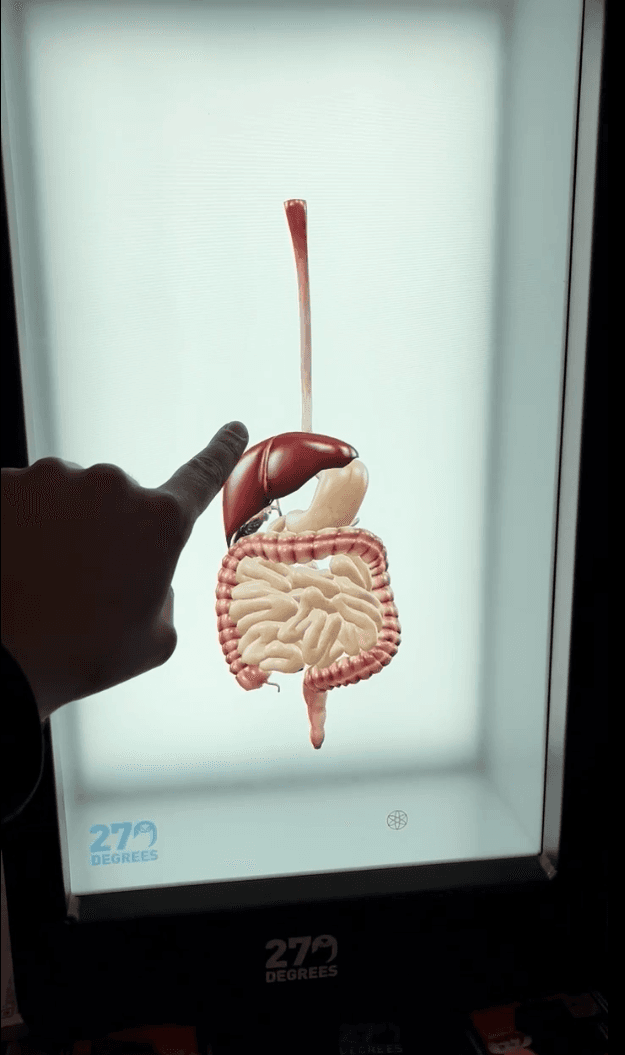
Holograms give patients clearer information, give clinicians presence across distance, and extend the reach of specialist care, at hospital, clinic, and pharmacy scale.
Read the article
The global shortage of healthcare workers is forecast to reach 10 million by 2030. Holographic specialists let one clinician serve many sites, without travel, without delay.
Read the article
Star Trek's Voyager imagined a holographic doctor who could serve anyone, anywhere. Holoconnects' technology is the first credible real-world version.
Read the article