News & insightsSector insight
The global shortage of healthcare workers is forecast to reach 10 million by 2030. Holographic specialists let one clinician serve many sites, without travel, without delay.
By Andre Smith, Founder & CEO, HoloconnectsPublished 5 December 2024

The WHO projects a global shortage of 10 million healthcare workers by 2030. Rural clinics, regional hospitals, and underserved urban areas are already feeling it. The traditional response, train more clinicians, accept longer waits, isn't scaling fast enough.
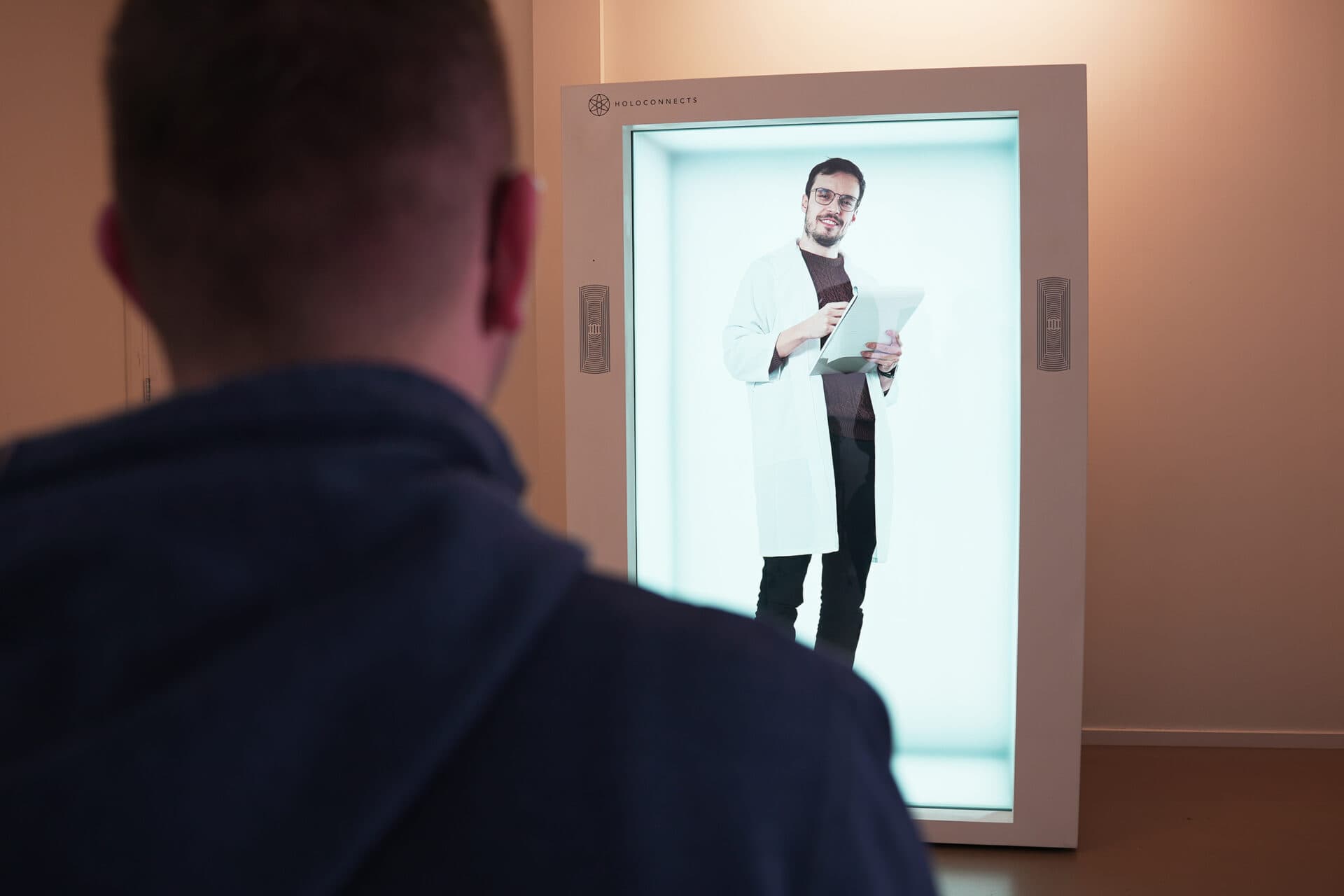
Holographic presence offers a different lever. A specialist physically located at a central hospital can appear, life size and fully interactive, in a regional clinic, a pharmacy, a partner site. The patient experiences a consultation that feels like an in person visit. The specialist sees three patients in three locations without leaving their office.
Crescent Regional Hospital became the first US hospital to use hologram technology for doctor-patient consultations. Stroomz Pharmacy in the Netherlands runs an AI driven Holographic Pharmacist to handle intake and reduce waiting times. These are not pilots, they are production deployments.
Holograms don't replace clinicians; they extend their reach. One specialist's time is multiplied across the network of Holobox locations. The technology is plug and play (power + internet, nothing more), which means rollout costs are manageable for individual sites.
For health systems wrestling with the worker shortage, that combination, proven deployment, simple installation, multiplied specialist capacity, is what makes holographic care a credible part of the answer rather than a research curiosity.
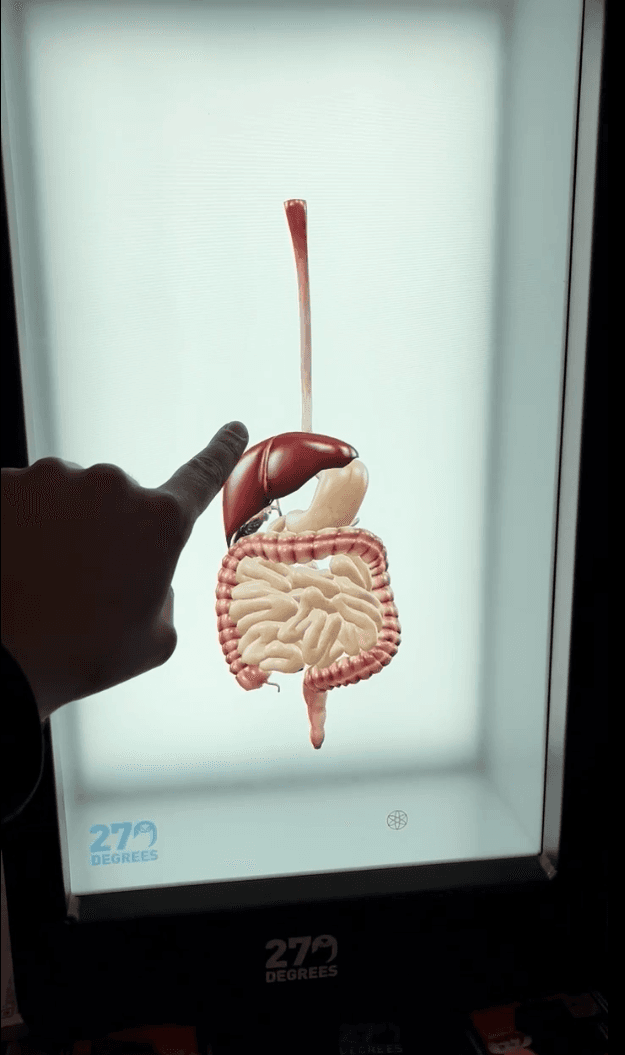
Holograms give patients clearer information, give clinicians presence across distance, and extend the reach of specialist care, at hospital, clinic, and pharmacy scale.
Read the article
El Confidencial profiles holographic care from Crescent Regional Hospital to a future where AI driven holograms support astronauts on long-duration space missions.
Read the article
Star Trek's Voyager imagined a holographic doctor who could serve anyone, anywhere. Holoconnects' technology is the first credible real-world version.
Read the article